Random
#include <stdio.h>

int main(){
        unsigned int random;
        random = rand();        // random value!

        unsigned int key=0;
        scanf("%d", &key);

        if( (key ^ random) == 0xcafebabe ){
                printf("Good!\n");
                setregid(getegid(), getegid());
                system("/bin/cat flag");
                return 0;
        }

        printf("Wrong, maybe you should try 2^32 cases.\n");
        return 0;
}
调用一次 rand(),在未调用 srand() 的情况下是可预测的
根据(key ^ random) == 0xcafebabe
可以算出key = random XOR 0xcafebabe
scanf(“%d”, &key);其中%d是输入十进制数
所以我们要查看random的值
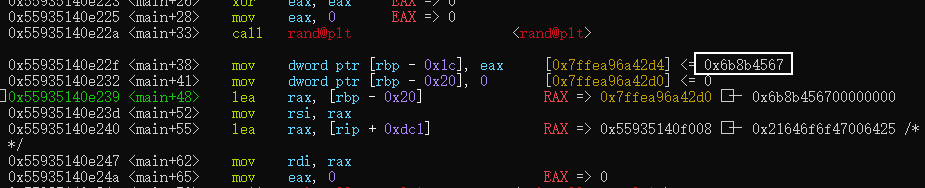
key = 0x6b8b4567 XOR 0xcafebabe = 2708864985

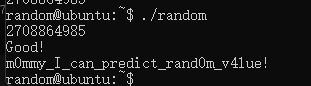
就ok了,很简单
Random
#include <stdio.h>

int main(){
    unsigned int random;
    random = rand();        // Generates a random value!

    unsigned int key = 0;
    scanf("%d", &key);

    if ((key ^ random) == 0xcafebabe) {
        printf("Good!\n");
        setregid(getegid(), getegid());
        system("/bin/cat flag");
        return 0;
    }

    printf("Wrong, maybe you should try 2^32 possible values.\n");
    return 0;
}
The rand() function is predictable when called without using the srand() function to initialize the random number generator.
Based on the condition (key ^ random) == 0xcafebabe, we can deduce that key is equal to random XOR 0xcafebabe.
The scanf("%d", &key); statement reads a decimal number from the user as input for the variable key.
So, we need to determine the value of random.
key = 0x6b8b4567 XOR 0xcafebabe = 2708864985
It’s actually quite simple.